
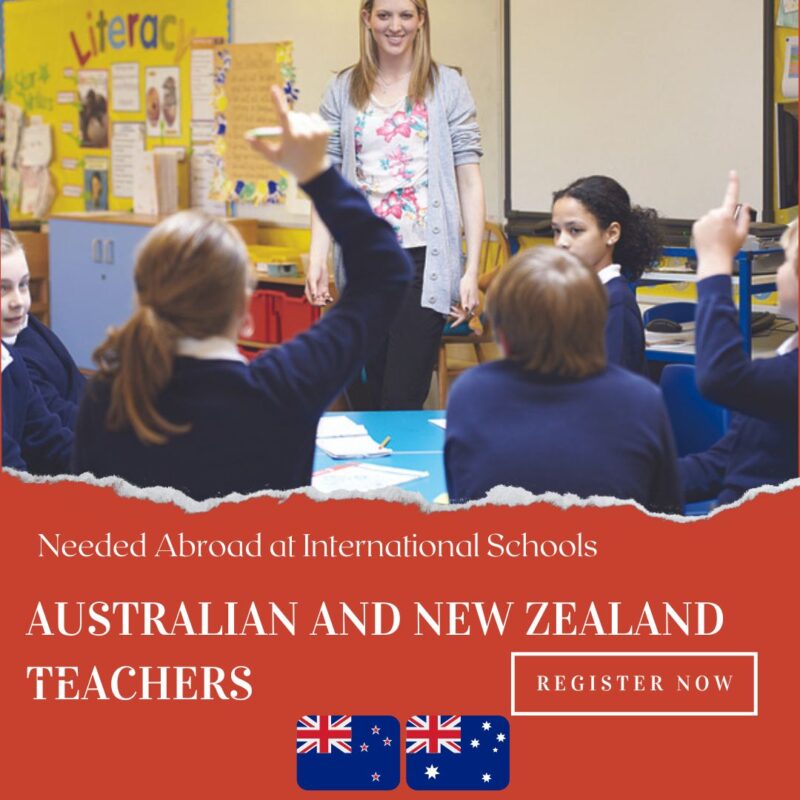
Antipodean teachers have lots of reasons for teaching internationally. They save more money than at home thanks to comprehensive employment packages that include housing, higher take-home pay, and lower cost of living. They get to see more of the world and experience new cultures, broadening themselves personally. They work alongside teachers from all over the world and learn new teaching skills and new curricula. There are more reasons than we can count.
What International Schools Hire Australian and New Zealand Teachers?
There are currently over 12,000 international schools around the world; however, most Australian and New Zealand Primary and Secondary teachers start their international teaching careers in either the Middle East, Southeast Asia, or the Far East. Why? Because these regions have the largest concentration of international schools, they pay the highest salaries and are the most flexible with teachers who don’t yet have experience in one of the main international school curricula- the UK, US, or International Baccalaureate.
Each country will have requirements for foreign teachers to get a visa or work authorisation. Then each school will have preferences on top.
The Edvectus team keeps up to date on all of these changing goalposts and is here to help guide you towards the right countries and schools that can and will hire you.
What Kind of Curricula Do International Schools Use?
Over half of international schools use the national curriculum of England and Wales. About a quarter use the International Baccalaureate, and about twenty percent use the US curriculum. There are a few Australian, Canadian, and New Zealand curriculum schools as well, but they are quite rare. Regardless of the curriculum used, a growing percentage of international schools are also bilingual, combining the host country language and parts of their curricula too. There is a huge spectrum of combinations, which is what we think makes it so unique and exciting. We find Australian and New Zealand teachers are particularly suited to international schools that value strong subject knowledge, bilingualism, and cultural sensitivity.
How Much Can an Australian or New Zealand Teacher Earn By Teaching Abroad?
The three things any international teacher will need to consider are:
- What is the after-tax salary I will earn?
- What benefits are included in the package, and what will I need to pay for out of my salary?
- What is the cost of living?
At home, you are used to getting a salary, and you know what the taxes will be. You know the cost of your housing, food, internet, utilities, and more. When you go abroad, you need to redo those calculations because everything changes.
Every school has a different salary scale and benefits – some of which can make a huge difference- and every country and city has a different cost of living. A country with a lower cost of living means each dollar you earn buys more, so you save more. Let’s take some typical examples from schools that will hire Australian and New Zealand teachers with 2-3 years of experience. We’ll use NZ teachers as an example:
In New Zealand
- Annual Salary $66,000
- After tax Salary $52,000
- Rent: $500 per month
- Money left for food, utilities, savings, per month: $3833
In the UAE
- Annual Salary (no tax): 144,000 AED ($65,000)
- Rent: 0 (apartment provided by school)
- Money left for food, utilities, savings per month: $5416
- Adjusted for cost of living (8.5% lower in the UAE), it will feel like: $5876
In China
- Annual Salary: 360,000 CNY ($83,000)
- After tax salary (Beijing): 272,000 CNY ($63,000)
- Rent: 0 (covered by housing allowance provided by school)
- Money left over for food, utilities, savings per month: $5250
- Adjusted for the cost of living (43% lower in China), it will feel like: $7507
In Thailand
- Annual Salary: 1,008,000 ThB ($46,000)
- After tax salary (Bangkok): 912,000 THB ($42,000)
- Rent: 0 (covered by housing allowance)
- Money left over for food, utilities, savings per month: $3500
- Adjusted for the cost of living (37% lower in Bangkok), it will feel like: $4795
You can see how tax rates, employment packages, and the cost of living variation affect your take-home pay and standard of living. In all cases, you should be able to save more by working internationally. And remember, our examples don’t include benefits like bonuses, which are common in international school packages, so you might do even better!
What are the Requirements for Australians or New Zealanders to Teach in International Schools?
Every country has different requirements, and every school has different preferences (which is why we are here to help!), but some basic requirements for international schools are:
- Bachelor’s degree in your teaching subject
- Teacher training, such as a PGCE or Bachelor of Teaching, or Master of Teaching
- Teacher registration
- Teaching references and Safeguarding checks cleared
- A clear criminal record check is required in many countries
There are also some restrictions on age in several countries, making it harder for those over 55. We don’t recommend you try to bring a pet abroad (more here), and those with a partner and/or dependent children should read about some of the challenges here.
How do I Get Started or Find Out More?
Registering with Edvectus is free, and all you need is a CV so we can see your education and experience. Don’t worry about having the perfect CV at this stage- we can help guide you along the way with tips and advice. Simply register, and our consultants (who are internationally experienced ex-teachers themselves) will contact you to find out more about you and explain what kinds of opportunities we have. Most of our jobs are online here, but we can help point you to the best jobs for your experience, educational background, personal situation, and goals. Matching teachers to jobs is what we do.
Australian Teachers and New Zealand Teachers – register with a click on the link below.
Your international career awaits.